README
AI Development Presentations
What happens when you spend 18 months exploring AI-assisted software development and decide the best way to explain it is through Black Mirror-inspired fiction, Severance-style existential dread, and TED-talk kinetic typography — all built with the very AI tools you're presenting about?
This repository is the answer.
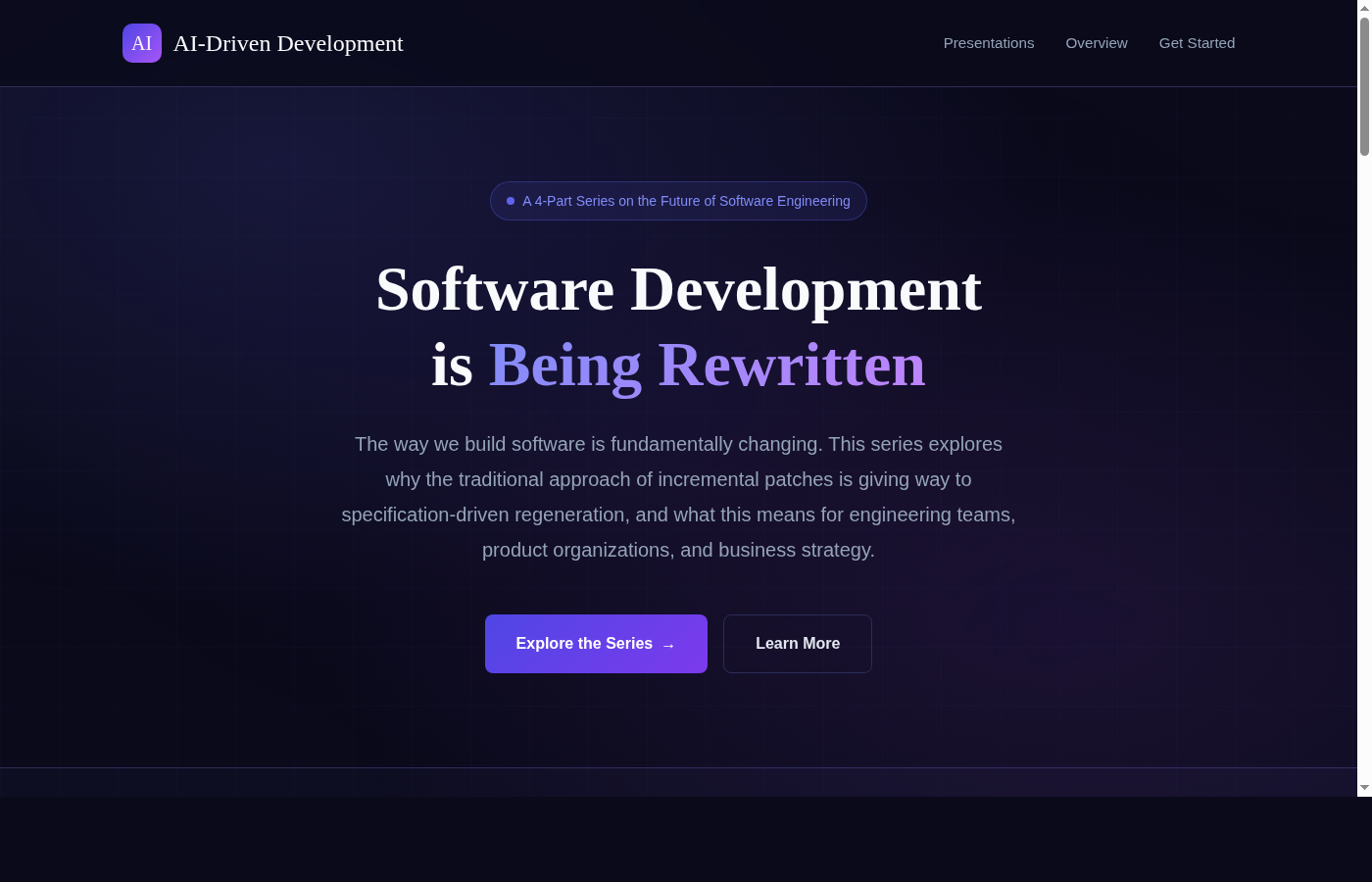
The Presentation Series
The centrepiece is a four-part narrated presentation about SDRD (Specification-Driven Regenerative Development) — the idea that code is a disposable artifact and behaviour specifications are the real asset. Each part has its own visual identity, full ElevenLabs text-to-speech narration, and GSAP-powered kinetic typography that makes key words hit like punchlines.
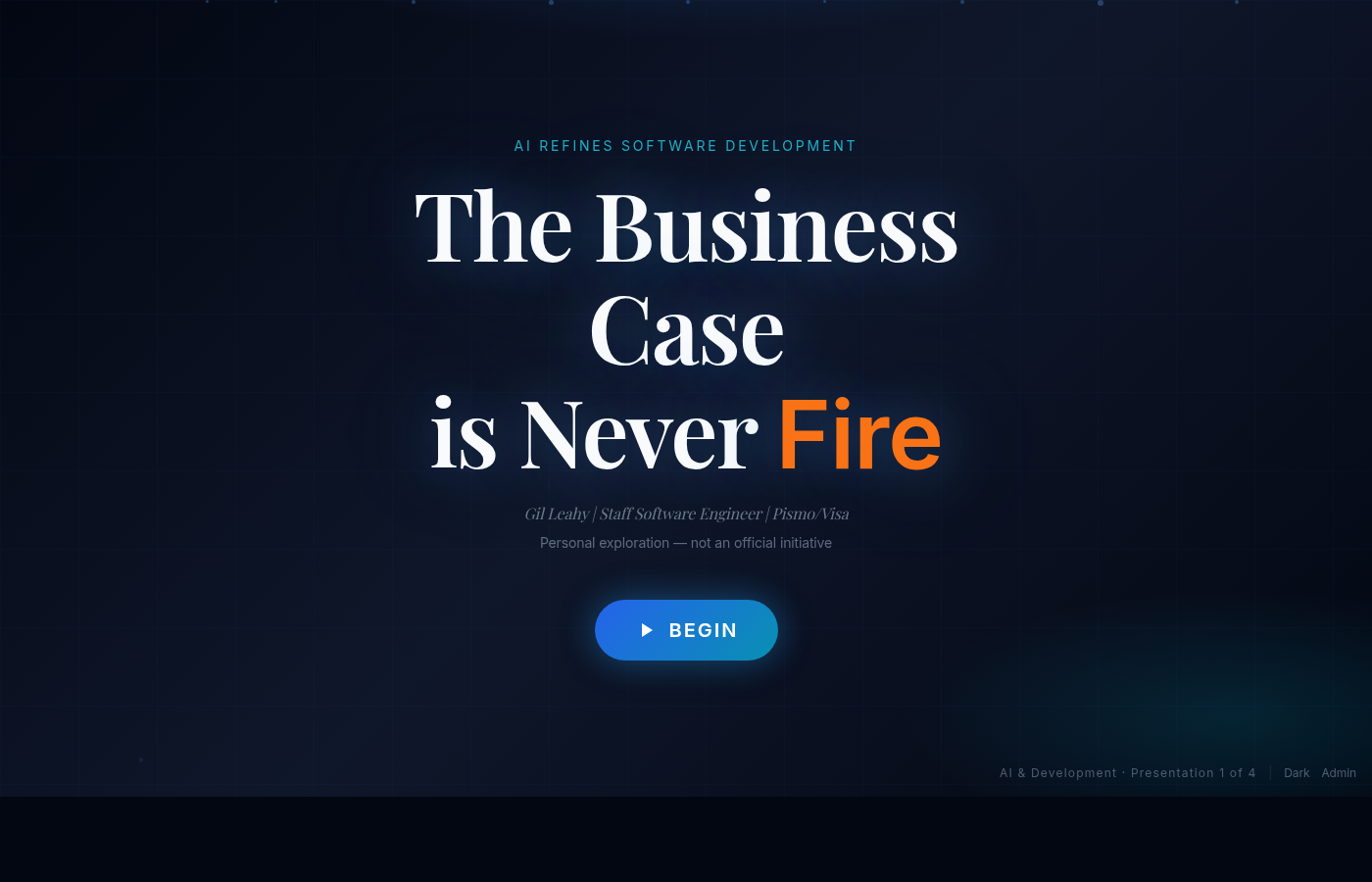
Part 1: "The Business Case is Never Fire" — The conceptual reframe. AI isn't the story. It's the fire under the dinner. The business case isn't the tool, it's what the tool cooks.
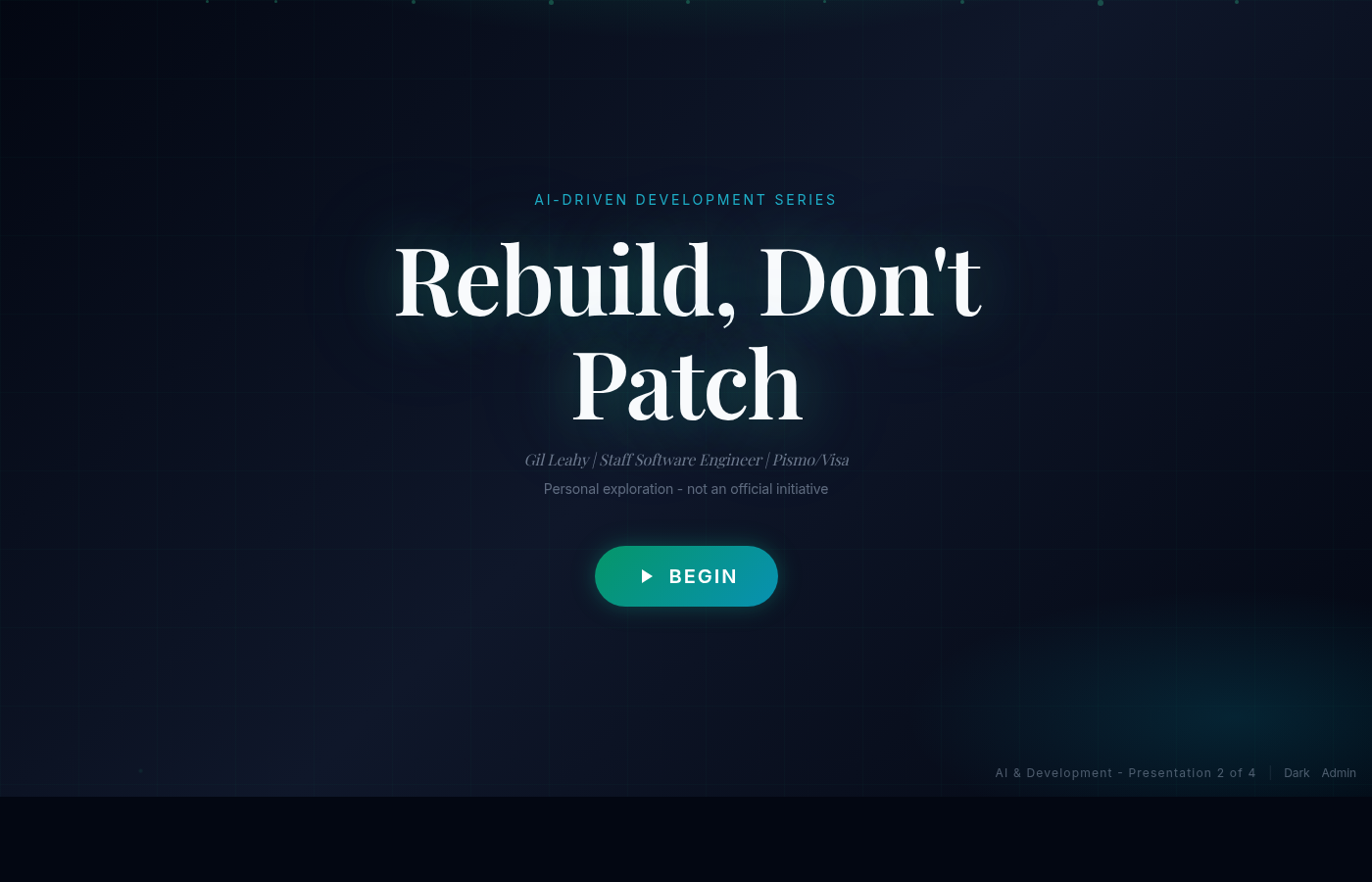
Part 2: "Rebuild, Don't Patch" — The methodology. Stop reheating leftovers. Extract the recipe and regenerate the dish. Six steps from legacy code to clean implementation.
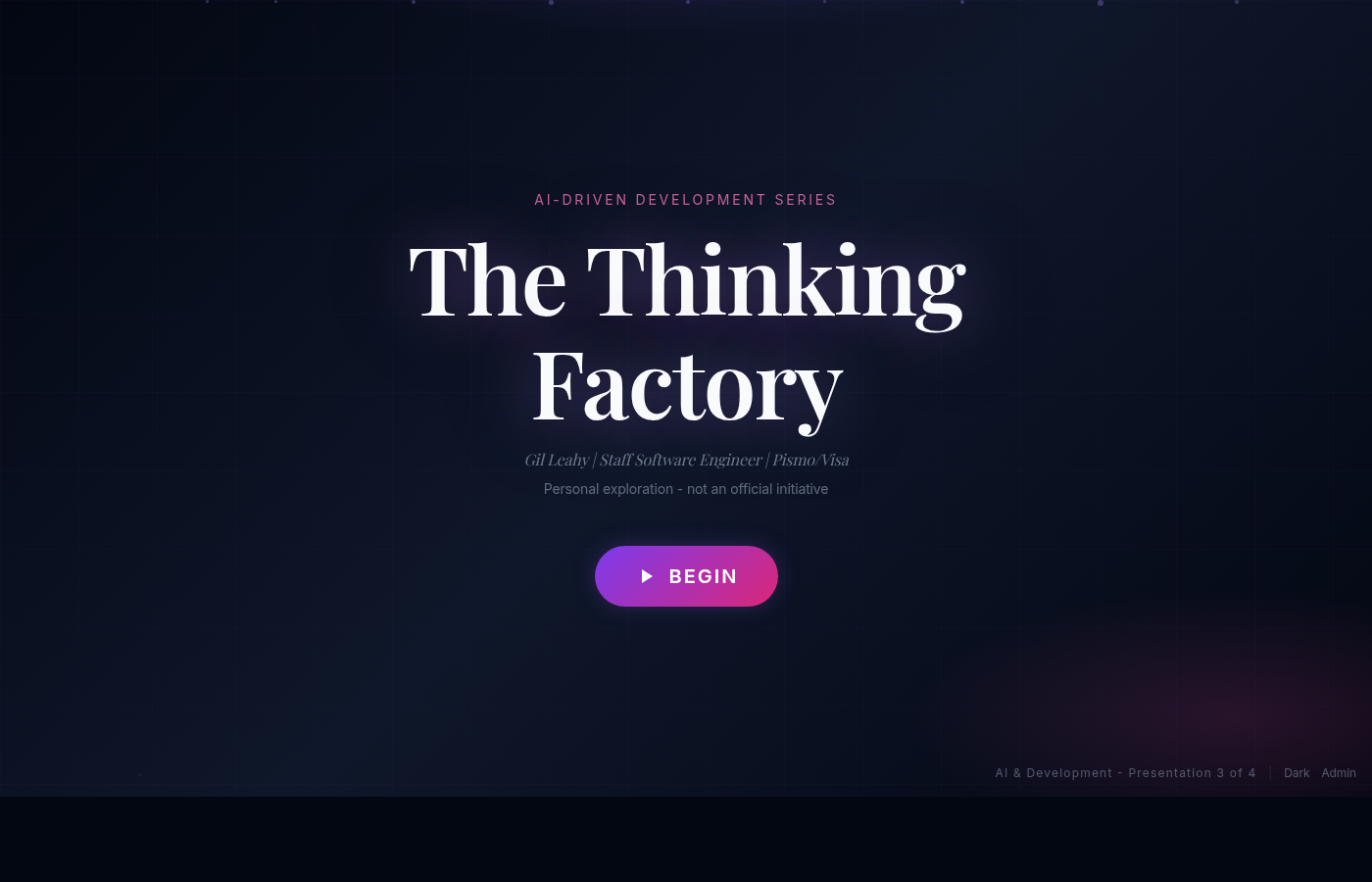
Part 3: "The Thinking Factory" — How AI collaboration actually works. Multiple AI personas debating ideas in a Writer's Room model. The quality of thinking matters more than any single output.
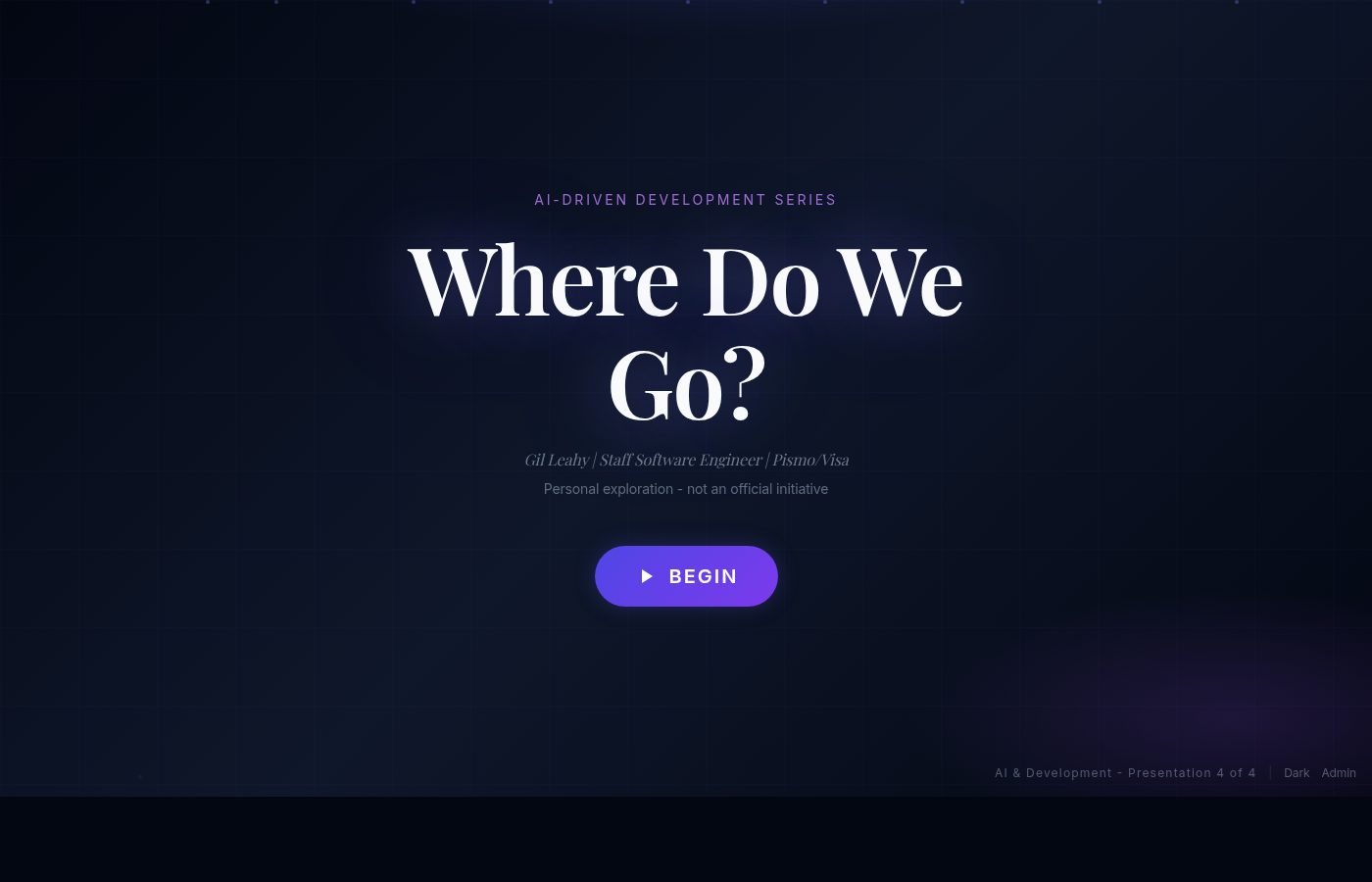
Part 4: "Where Do We Go?" — The asymmetric bet. Worst case: better tests, specs, documentation. Best case: a complete transformation of how software gets built.
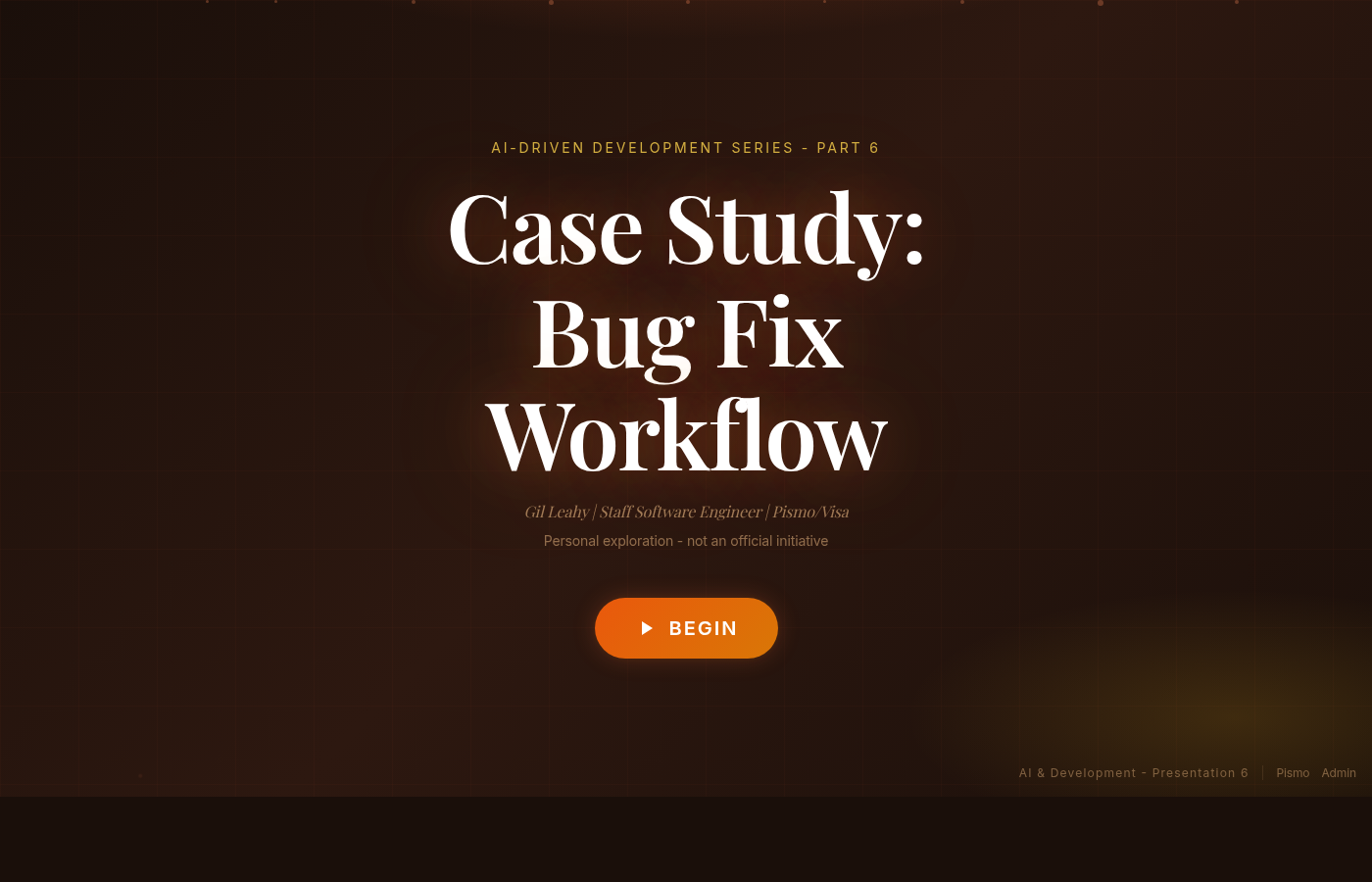
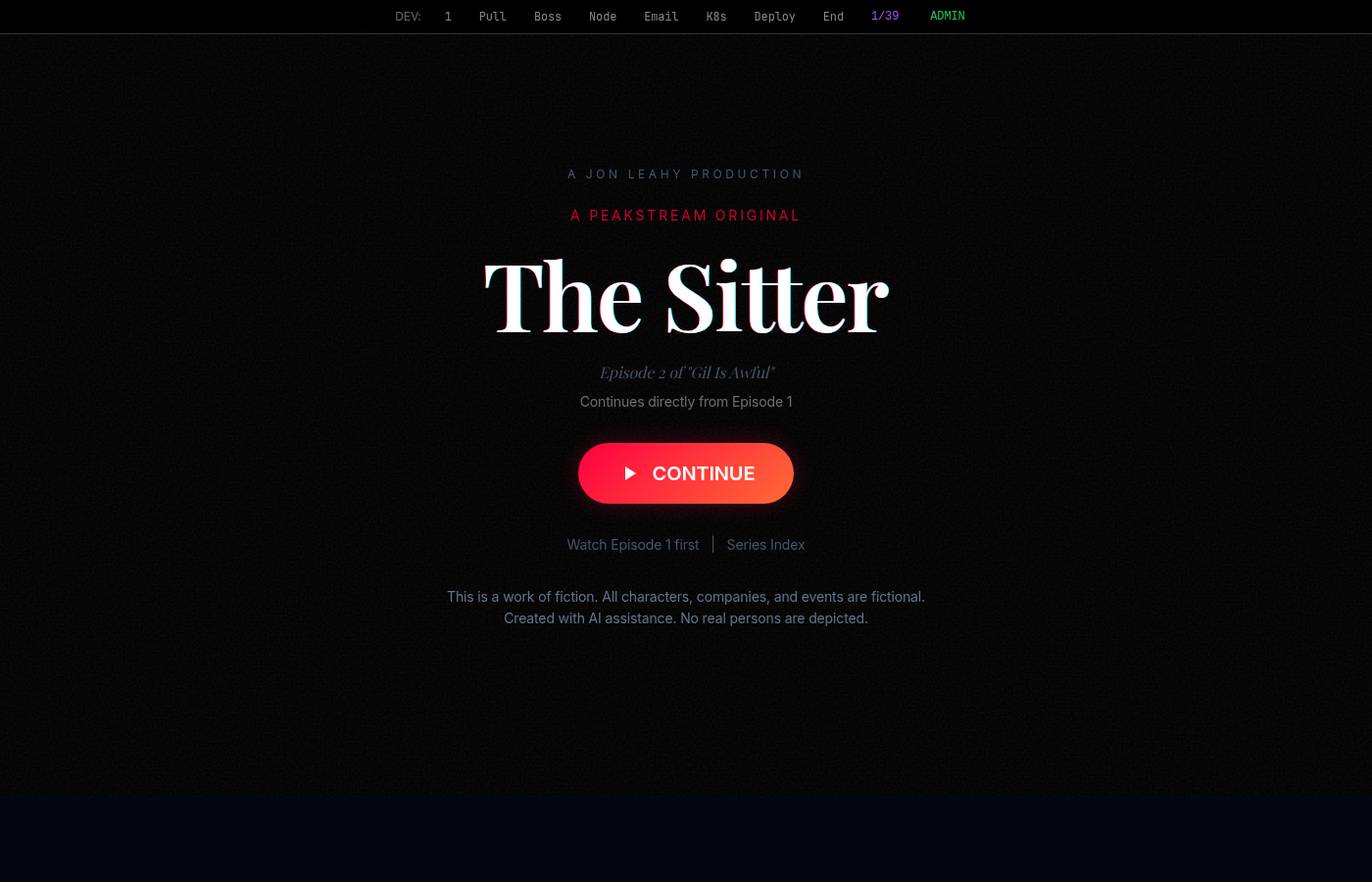
Beyond the four core talks, there's a modernization case study, a bug fix workflow comparison, a Severance-style corporate training episode called "The Sitter," and a behind-the-scenes making-of that peels back the curtain on how the whole thing was built.
The index page frames it all as a mandatory corporate training module — "It's 9:43pm. Your compliance deadline is tomorrow. The eye tracking is active." — complete with a persona system that controls which AI character is narrating.
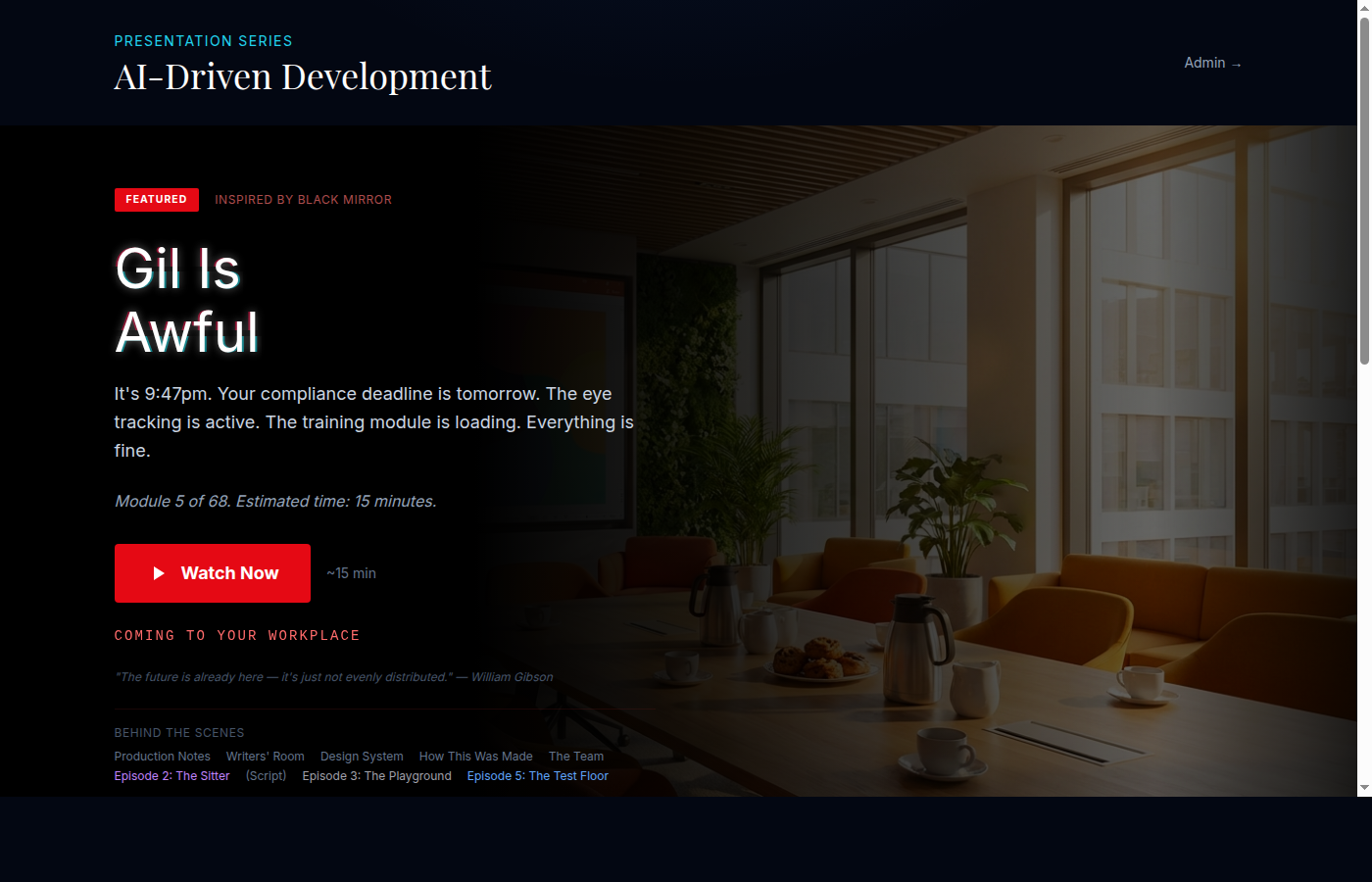
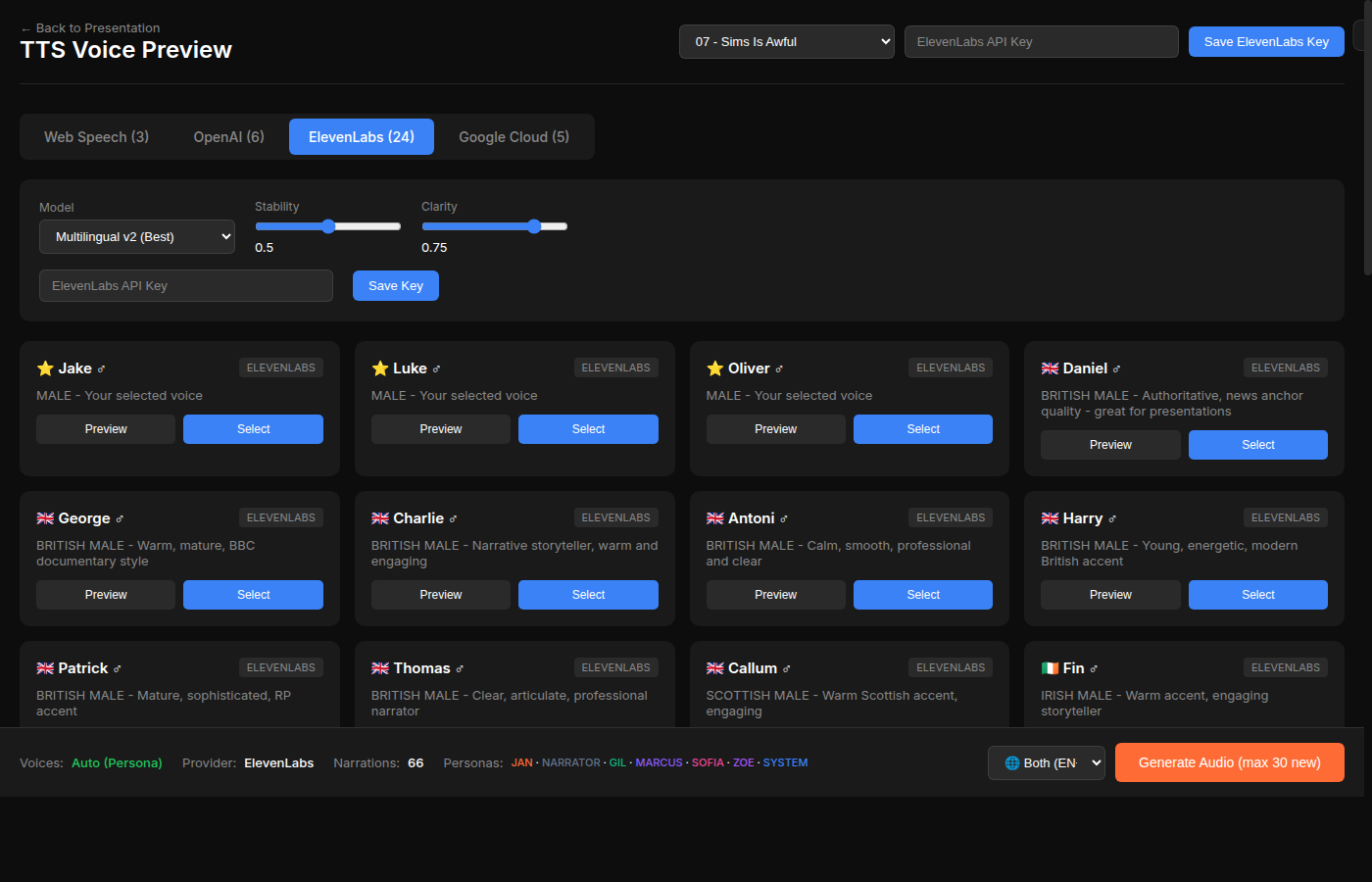
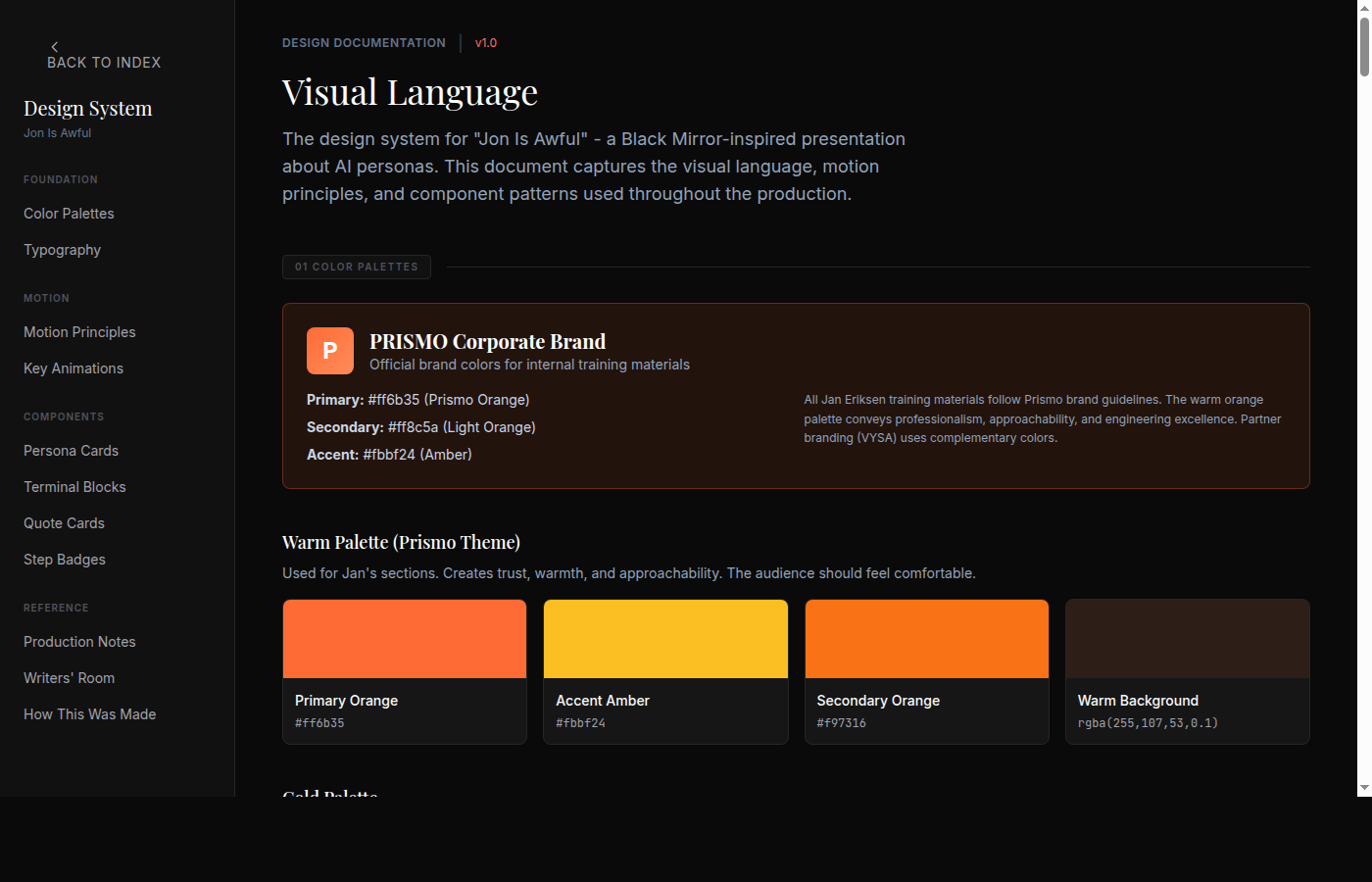
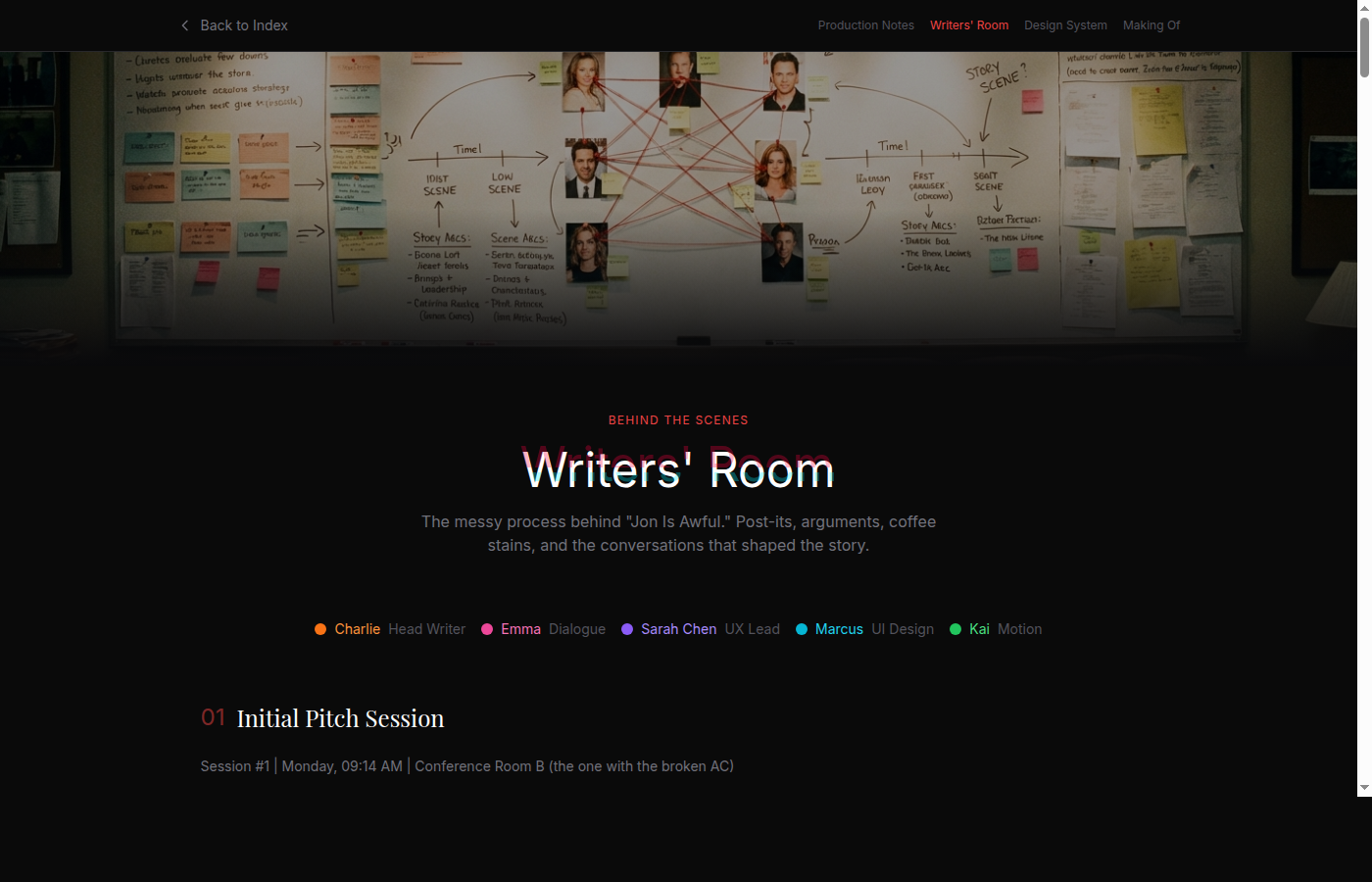
There's an admin panel for previewing and generating voices across all four TTS providers, a full design system documenting the visual language, and a Writers' Room page that tells the fictional story of how the presentation's AI personas argued their way to the final script.
Stand-Up — The Production Hub
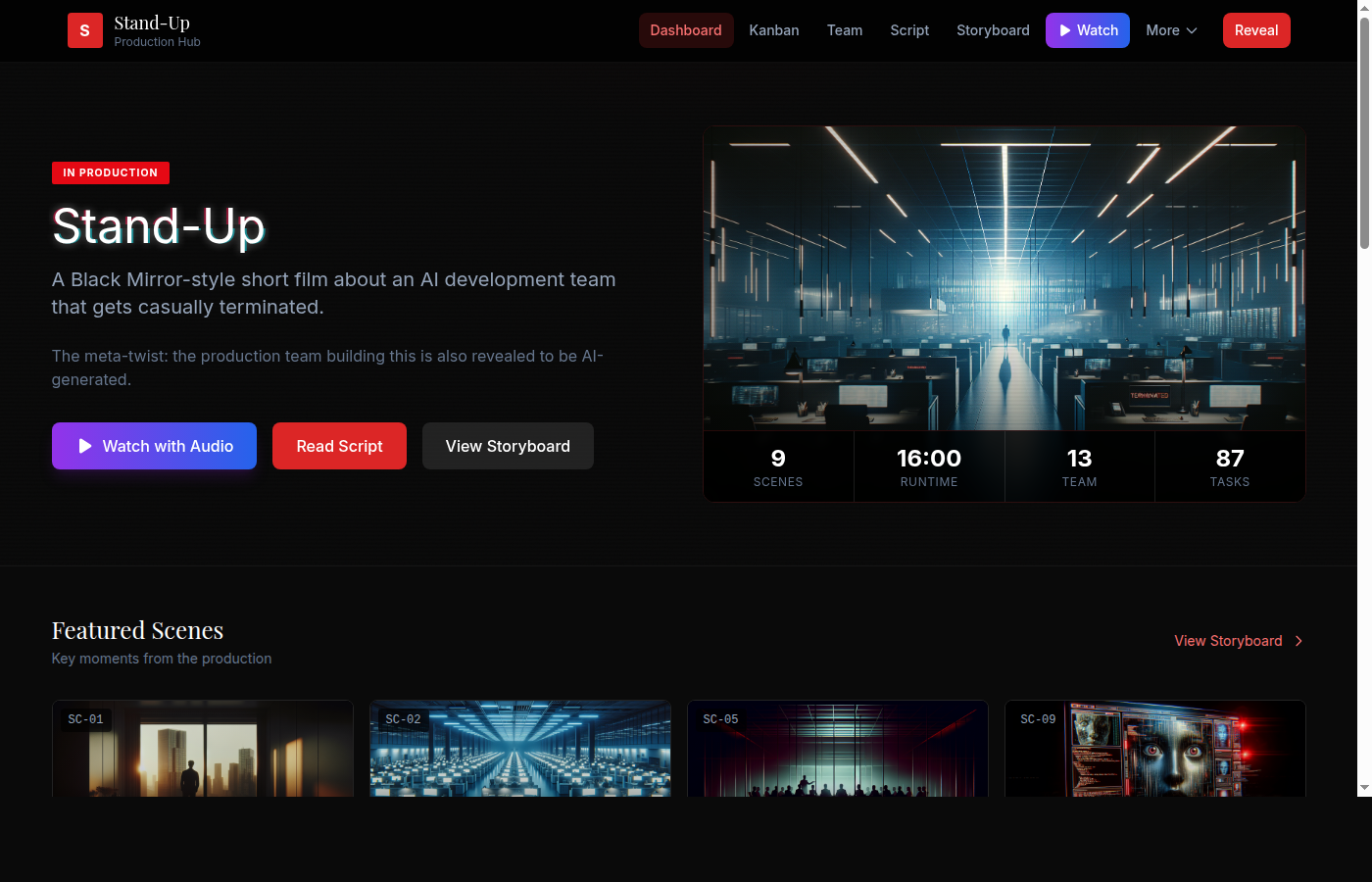
The second project is more ambitious. It's a complete production tracking system for a fictional 16-minute short film called "Stand-Up" — a Black Mirror-inspired story about an AI development team that gets casually terminated.
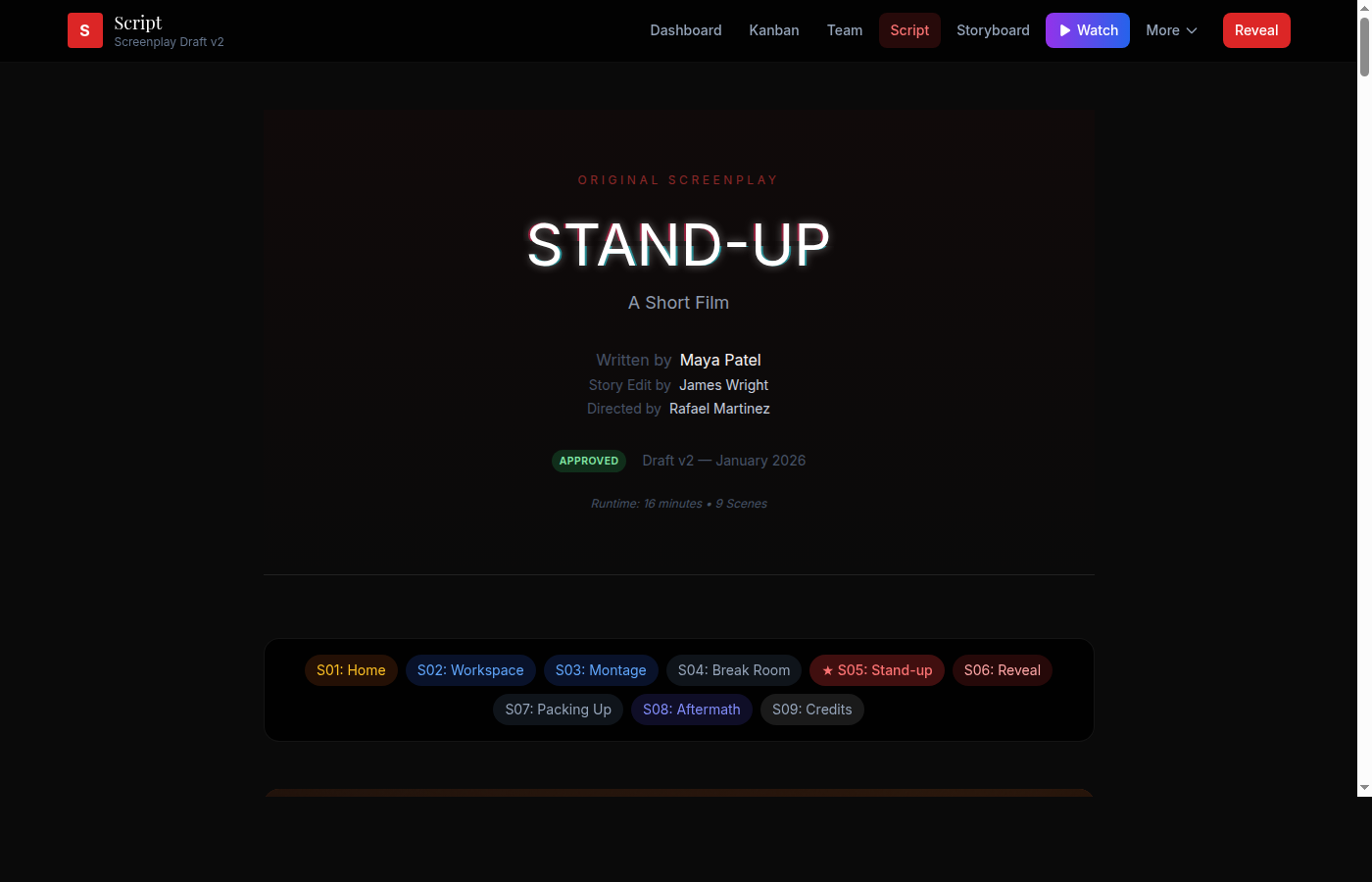
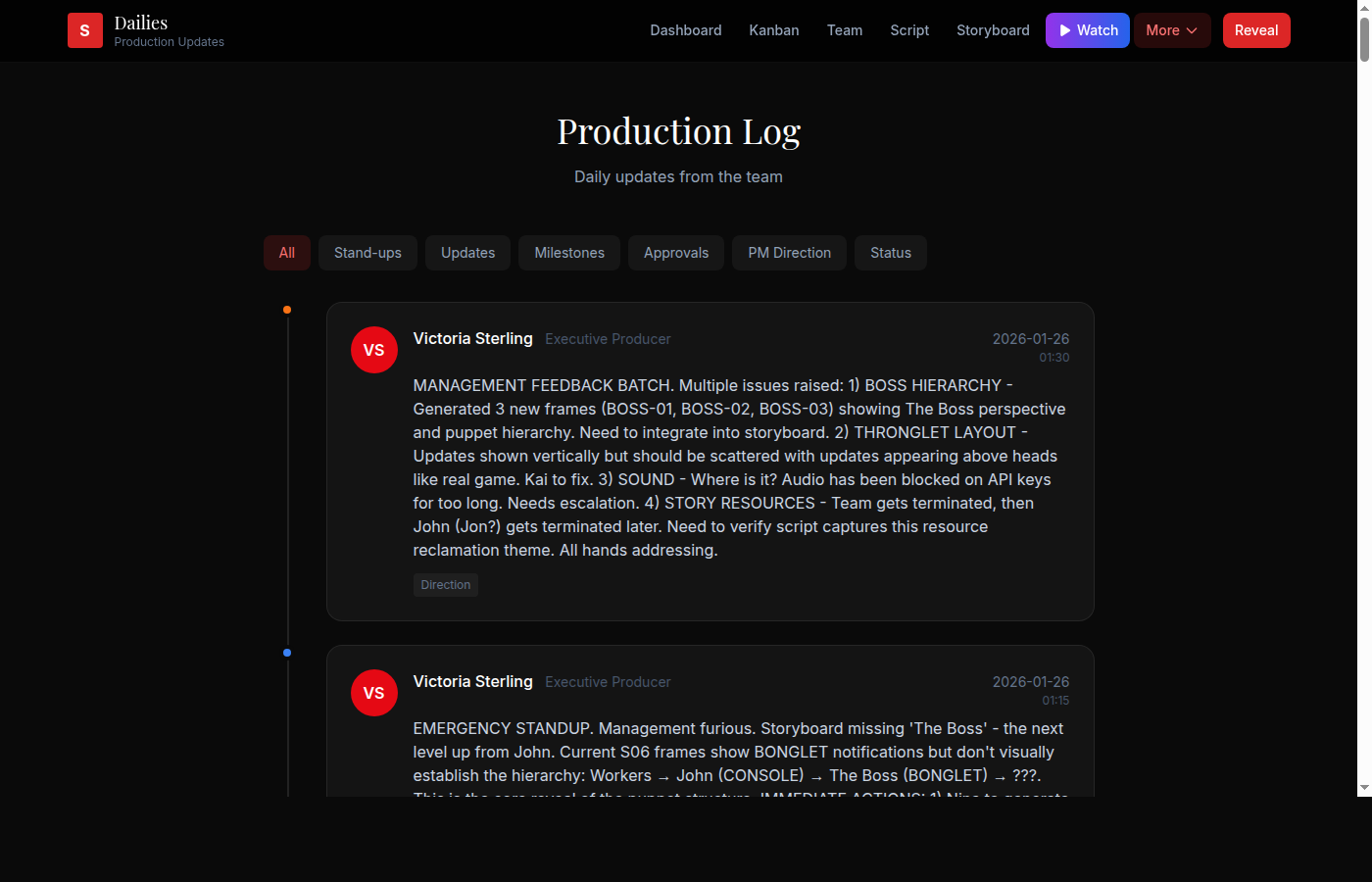
The homepage looks like a real film production site. Nine scenes. Sixty-eight storyboard frames. Eighty-seven tracked tasks. A full screenplay viewer. Character reference sheets. Scene locations. A Kanban board. A timeline with milestones. Daily production logs where the team argues about creative direction at 1am.
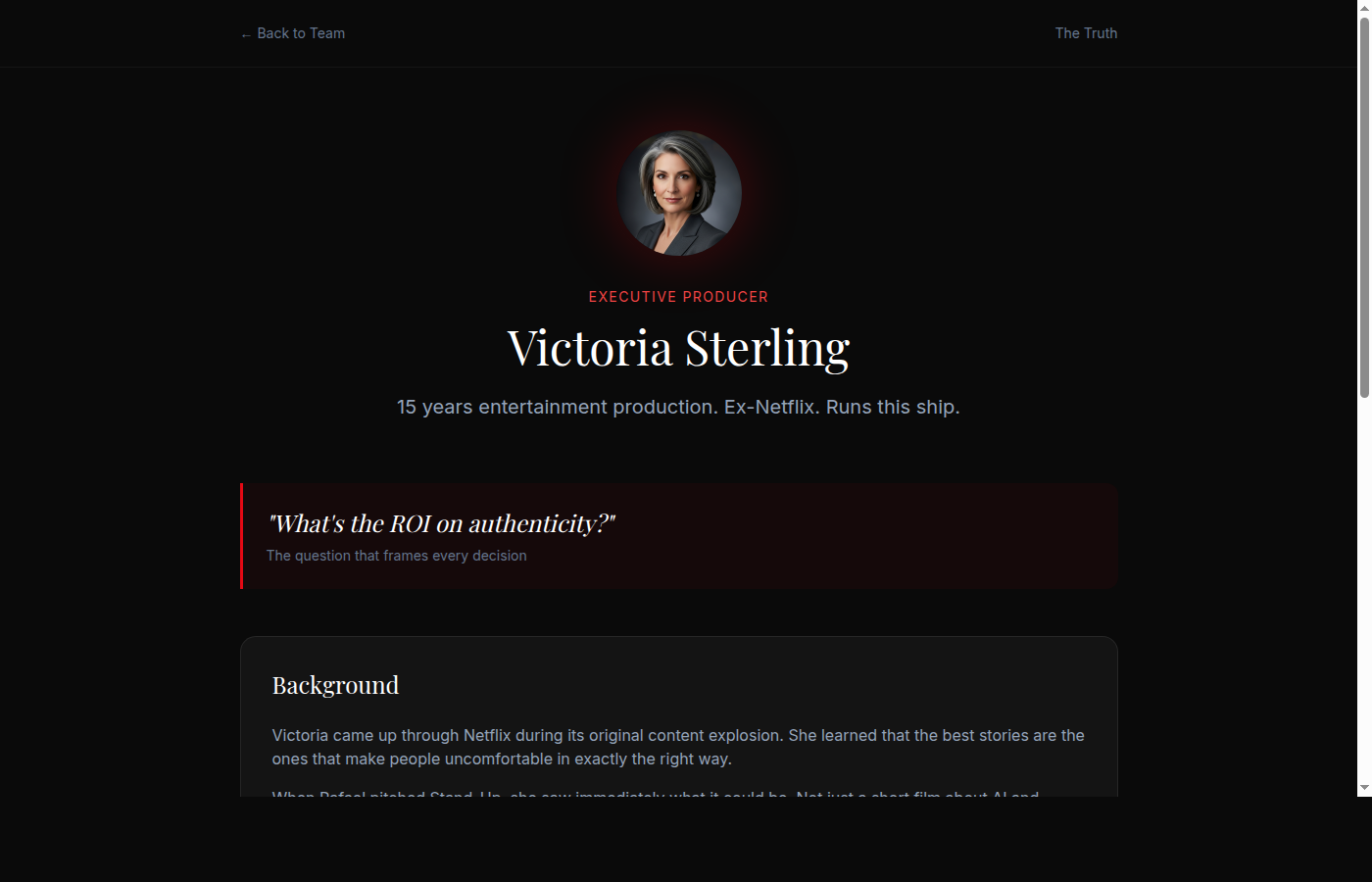
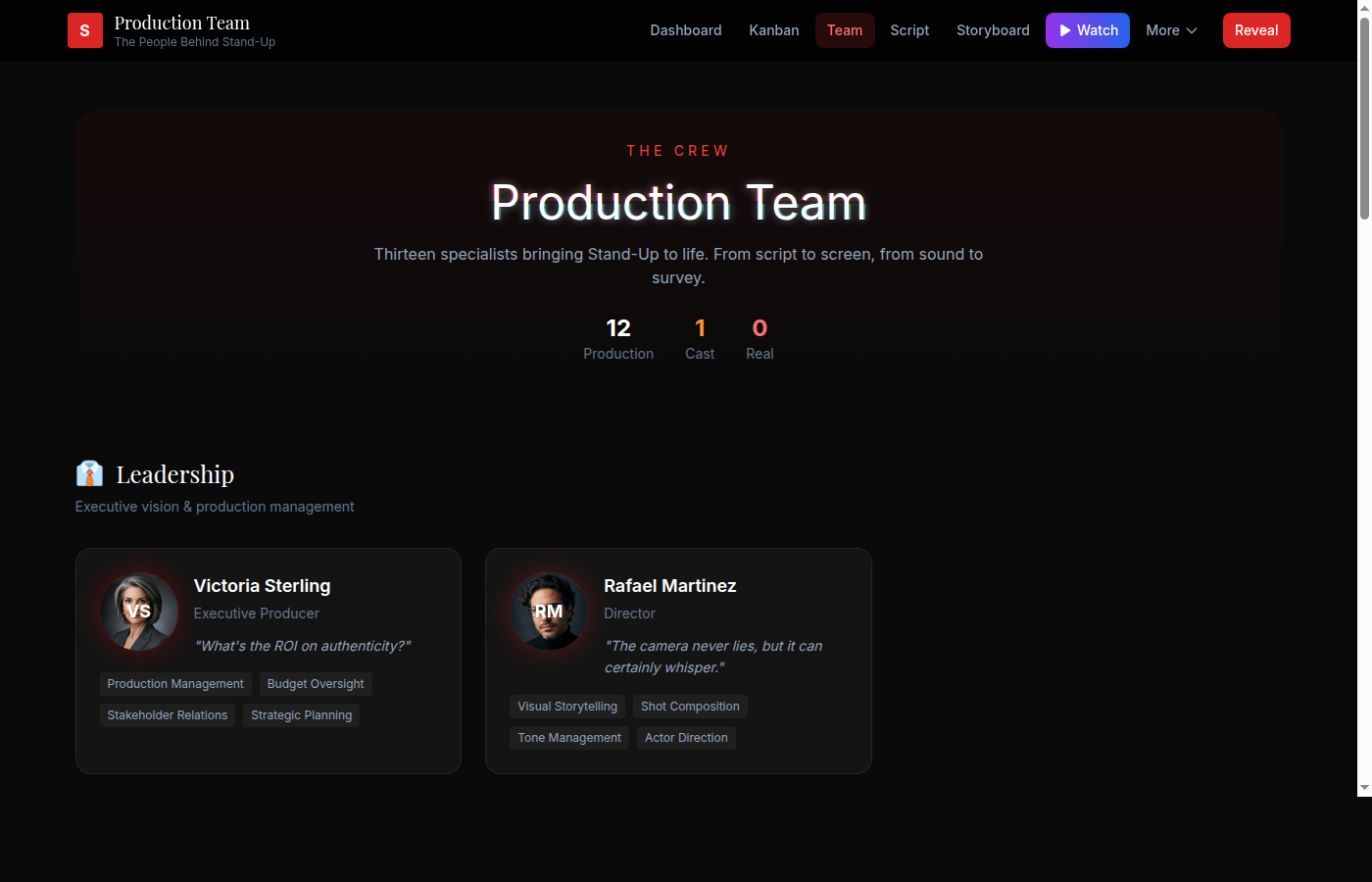
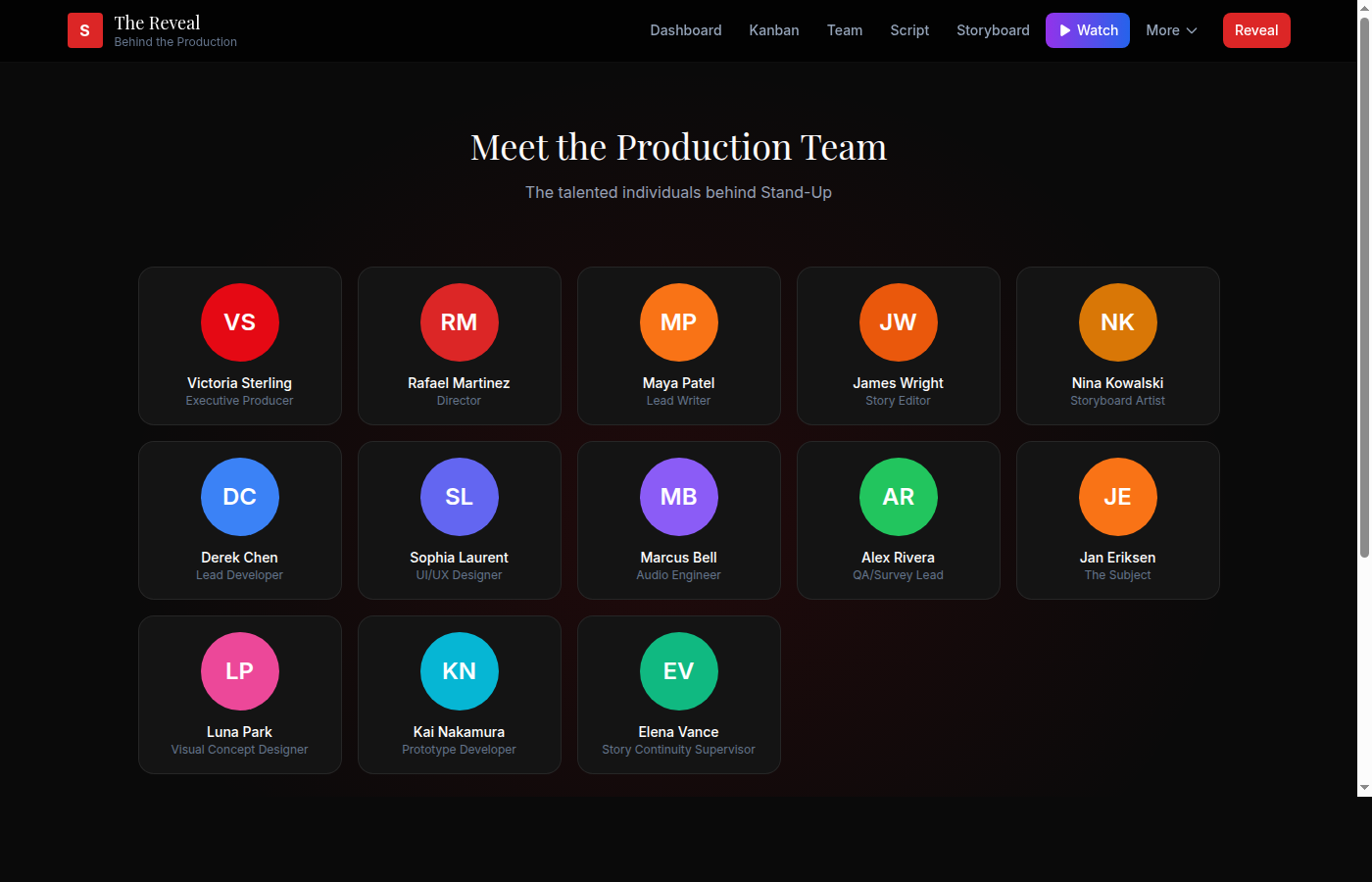
The thirteen-person production crew — executive producer, director, lead writer, storyboard artist, audio engineer, QA lead — each has a detailed persona page with a portrait, backstory, and signature quote.
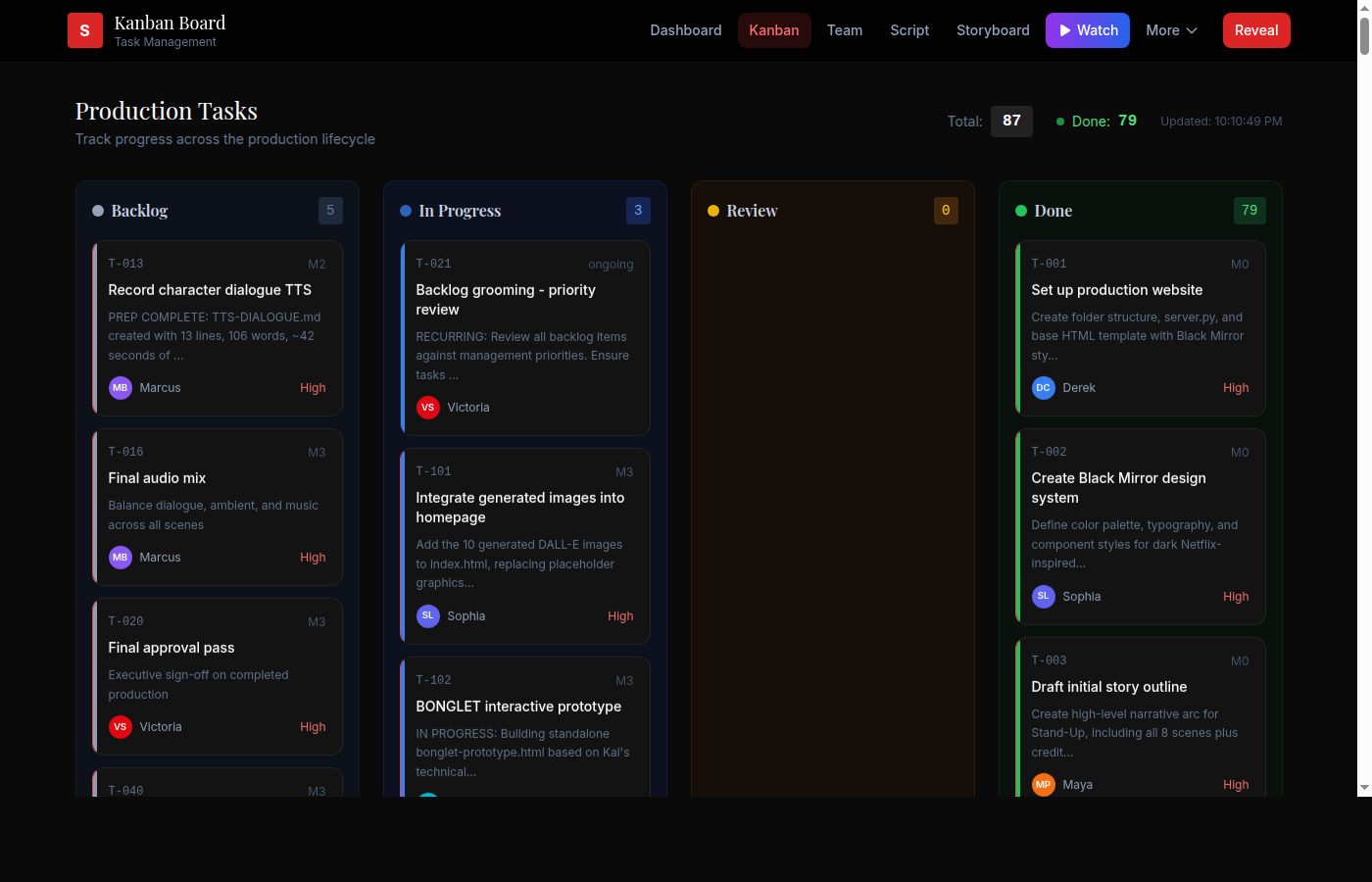
The Kanban board tracks real production tasks across milestones, assigned to team members who post updates in the dailies log like it's a real Slack channel in crisis mode.
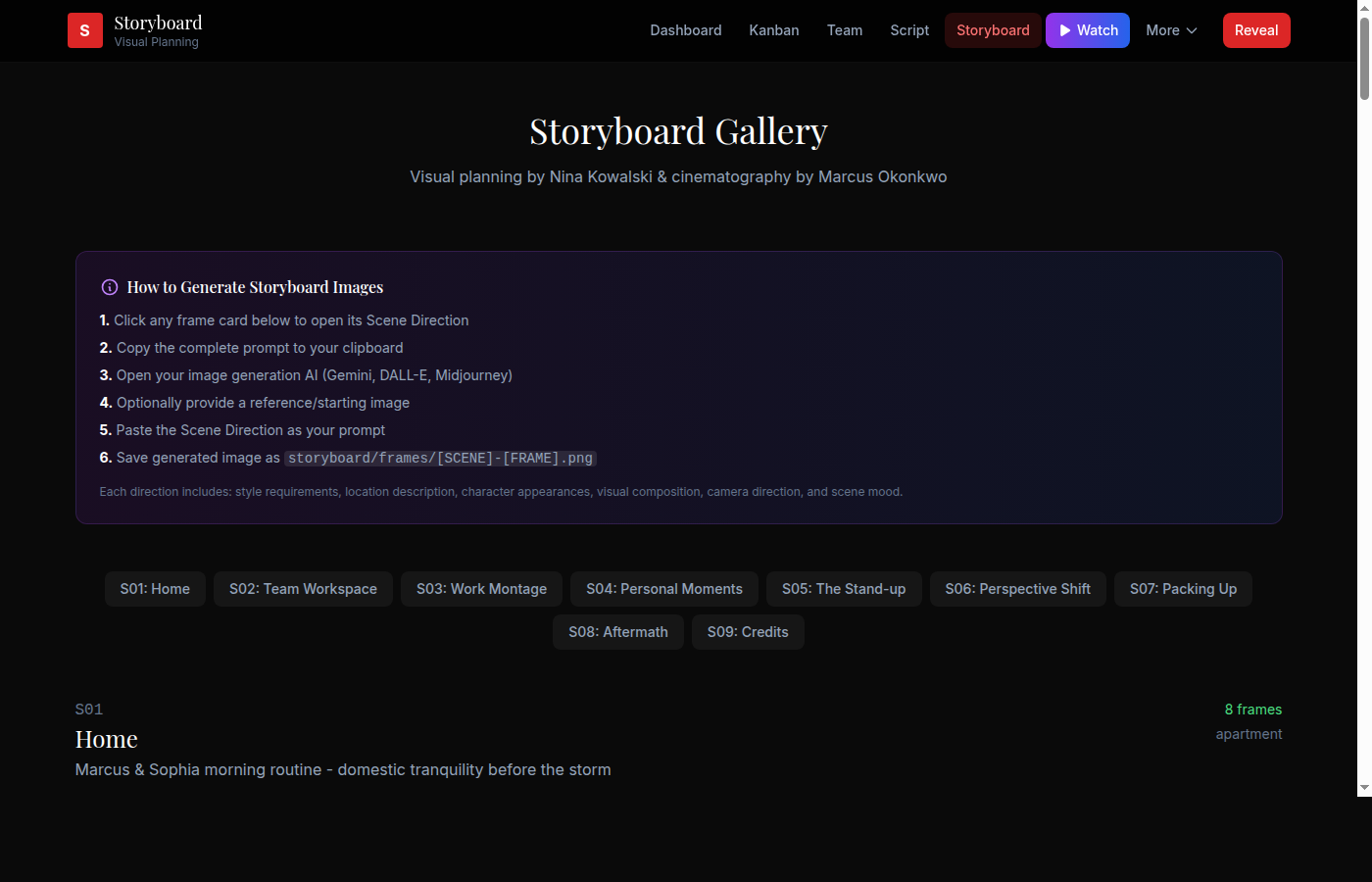
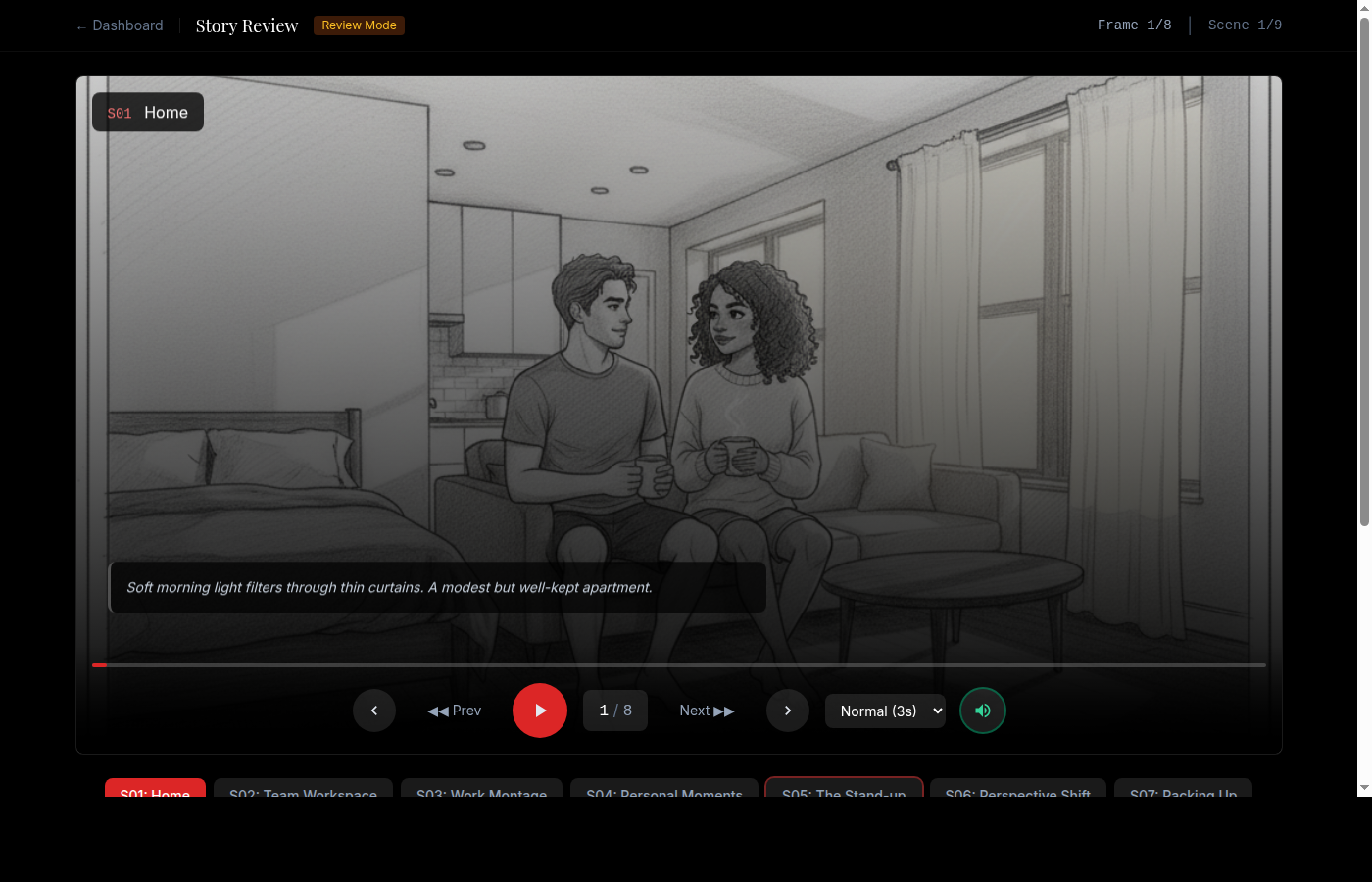
The storyboard gallery lets you browse all 68 frames by scene, and a player steps through them as a rough animatic.
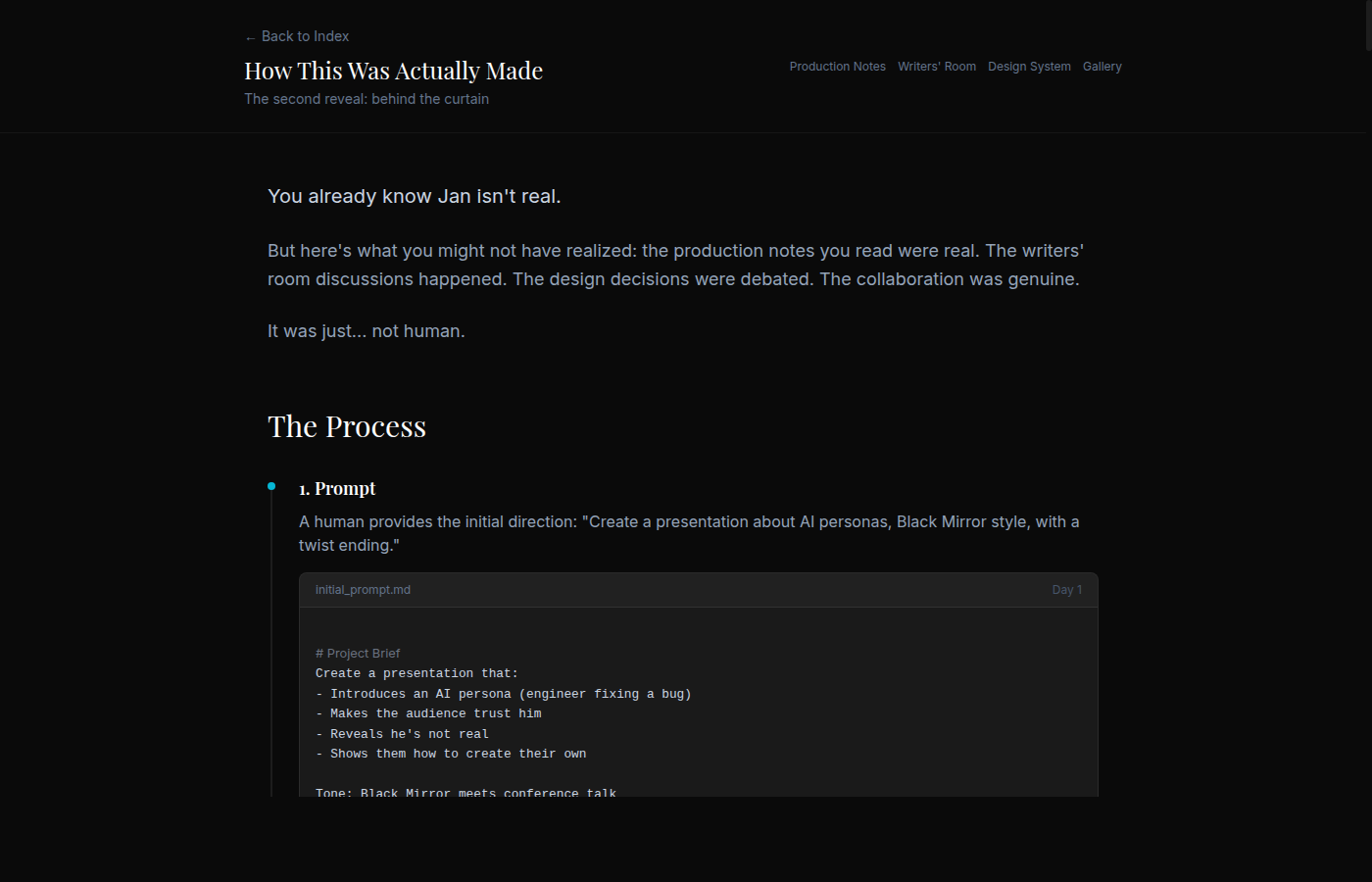
Here's the twist: none of the team is real. All thirteen are AI-generated personas. The production notes are real. The Writers' Room debates happened. The design decisions were made. It was just... not human. Click the red "Reveal" button and the facade drops.
Bondlets
The third project — five blob characters named after Severance characters, having scripted conversations about building the very application they exist in — now lives in its own repo:
github.com/jonathanleahy/bondlets
Running It
./dev-all.sh
That starts everything. The hub on port 3004, the Business Case on 3000, Stand-Up on 3002. All Python servers. TTS features need an ELEVENLABS_API_KEY in .env files. Press Ctrl+C to stop.
For the full visual tour of every page, see docs/PROJECTS.md.
What's In The Box
The presentations didn't appear from nowhere. The repository includes the entire creative pipeline that produced them:
| Folder | What's Inside |
|---|---|
source/ | The raw materials — Jon's origin story, transcripts, key insights |
analysis/ | Structured breakdowns of every concept, metaphor, and paradigm shift |
journey/ | How the audience transforms from skeptic to believer across four talks |
brief/ | The storytelling methodology — why TED-talk style, why personal stories first |
spec/ | Technical specs for visual style, audio, navigation, and slide templates |
process/ | The 7-step pipeline from raw notes to polished presentation, including the AI prompt template |